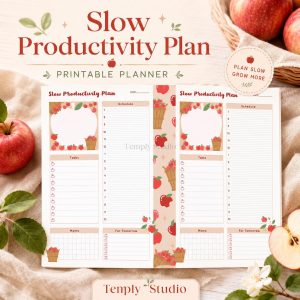





Quick answer: a useful digital planner for freelancers should help you see client commitments, protect time for paid work, remember admin, and review the week without turning the planner into a second project-management system. Start with the decisions you make repeatedly—deadlines, meetings, focused work, follow-ups, invoicing reminders, and personal capacity—then choose layouts that support those decisions.
You do not need a planner that claims to contain a “freelancer dashboard.” A general planner can work well if its monthly, weekly, daily, notes, and project pages match your workflow. Product-specific modules should only be relied on when the product page confirms they are included.
What a freelancer actually needs to plan
| Planning layer | What to track | Useful view |
|---|---|---|
| Long-range commitments | Client milestones, launches, renewals, travel, tax/admin dates | Monthly |
| Weekly capacity | Meetings, production blocks, revisions, admin, buffer | Weekly |
| Today | Next actions, focused work, calls, small admin tasks | Daily |
| Project context | Scope notes, decisions, non-sensitive reference information | Notes/project pages |
| Review | Completed work, unfinished commitments, next week’s constraints | Weekly review |
Start with client commitments, not a giant task list
Freelance work can create several kinds of “urgent” work at once. A client deadline, a revision request, a sales follow-up, and an invoice can all feel important. The planner becomes useful when it separates commitments from possibilities.
Put fixed client dates and appointments into a monthly or calendar view first. Keep descriptions short enough to scan. Then move the next actions into the current week. This prevents distant projects from filling your daily page before they are actionable.
Plan weekly capacity before assigning daily tasks
A weekly page is often the most useful working surface for freelancers because client work competes with business administration and personal commitments. Instead of planning every available hour, mark the time that is already unavailable, then estimate how much focused capacity remains.
The daily planner for time blocking guide can help you turn a short priority list into realistic work blocks. Keep buffer around calls, delivery dates, and revision windows so one delay does not invalidate the whole week.
A simple weekly freelance planning order
- Review client deadlines and meetings.
- Mark non-work commitments that affect availability.
- Choose the few deliverables that must move this week.
- Reserve focused blocks before filling the week with small tasks.
- Group email, invoices, file cleanup, and follow-up into admin windows.
- Leave unscheduled capacity for revisions or unexpected requests.
- Finish with a short review and move only the work that still matters.
Keep the planner separate from sensitive client data
A planning tool is not automatically an appropriate place for confidential client information. Use project labels or neutral descriptions when possible. Store contracts, credentials, personal data, payment details, and restricted files in systems designed for that purpose and follow the requirements of your client, employer, platform, or jurisdiction.
The planner only needs enough context to help you decide what to do next. “Client A — review landing page” is often more useful in a schedule than copying private project details into every task.
Use a monthly view for workload collisions
Freelancers often discover capacity problems too late because each project looks manageable on its own. A month view can reveal when three delivery dates, a personal trip, and a recurring admin deadline land in the same week.
Use the month to spot collisions and renegotiate or move internal milestones before the week begins. For a deeper comparison of planning horizons, read monthly vs weekly digital planner.
Build a repeatable weekly reset
A short reset prevents old tasks from silently accumulating. Review what was completed, close outdated reminders, move unfinished commitments deliberately, and check the next month for anything that needs early attention. The goal is not to recreate the planner from scratch every week.
Use the digital planner weekly reset routine as a supporting workflow. Keep the review short enough that you will still do it during a busy week.
Choose planner features by workflow, not freelancer labels
Before buying a planner, verify the actual file rather than assuming a product name guarantees certain modules. Useful questions include:
- Does the date range cover your working period?
- Are the monthly and weekly pages readable at your normal zoom level?
- Do you need portrait or landscape orientation for split-screen work?
- Are hyperlinks included if fast navigation matters?
- Is the file ready to annotate, editable in a source app, or both?
- What software/account is required?
- How are the files delivered and what license applies?
File organization matters when projects multiply
Keep the untouched purchase file separate from your working planner. Use clear filenames and avoid storing every exported page in the same folder. If you use Goodnotes, its documentation distinguishes sync from one-way Auto Backup and recommends keeping appropriate backups before major device changes.
A clean file routine reduces the chance of importing the wrong copy or overwriting the source while you are busy. You can adapt the folder principles in the digital planner backup and file organization guide.
Common freelancer planning mistakes
- Planning revenue instead of committed work: a template cannot guarantee bookings, sales, or income.
- Using every empty slot: revisions and client communication need buffer.
- Mixing project notes with the calendar: keep the schedule scannable.
- Tracking sensitive data in a general planner: use appropriate secure systems.
- Choosing by page count: more pages can mean more maintenance rather than more value.
- Rewriting the same tasks across month, week, and day: each view should answer a different planning question.
Separate delivery deadlines from internal milestones
A client may care about one final deadline, but your plan usually needs several earlier checkpoints. Work backward from the promised date and create internal milestones for research, first draft, review, revisions, and final delivery when those stages apply. Keep those internal dates realistic and avoid presenting them to the client as new commitments unless you have agreed to them.
This distinction helps the monthly page stay useful. The client deadline remains the external commitment, while weekly pages carry the internal work needed to reach it. If the project changes, you can move an internal milestone without losing sight of the final obligation.
Review capacity before accepting new work
Before saying yes to another project, look at the weeks around the requested delivery date rather than only checking whether that date itself is free. Existing revisions, meetings, travel, and admin can make an apparently open date unrealistic. A planner can make this load visible, but it does not replace a written scope, contract, or professional project-management process.
Use the review to ask three questions: what is already committed, what has flexible timing, and how much buffer remains? If the answer is unclear, schedule a smaller next step—such as a discovery call or proposal review—rather than promising the full delivery immediately.
Frequently asked questions
Do freelancers need a specialized planner?
No. A general planner can work well if it supports your dates, weekly capacity, daily priorities, notes, and review rhythm. Only rely on specialized pages when the exact product confirms they are included.
Should I track invoices in a digital planner?
You can use reminders or non-sensitive status notes, but financial records and client data may require a dedicated accounting or business system. A planner should not replace professional financial records.
Is a daily or weekly planner better for freelance work?
Weekly planning is useful for allocating capacity across clients; daily planning is useful for the next actions and focus blocks. Many freelancers benefit from both.
Can a digital planner improve my freelance income?
A planner can help organize commitments and decisions, but it cannot guarantee more clients, higher income, or business growth.
Choose a planner that makes capacity visible
The most useful freelancer planner is the one that helps you notice overload before you promise more work. Start with deadlines, weekly capacity, focus time, admin, and a simple review. Then choose the file and layout that supports those habits.
Browse the Temply Studio digital planner collection and verify each product’s current files, layouts, software requirements, delivery, and license before purchase.
Official reference
Temply Studio
Stop chasing your goals with sticky notes and scattered notebooks. Our premium digital planners and Canva templates are designed to help you plan with intention, stay consistent, and actually enjoy the process.


Questions about this guide?
Ask about the planner, share how you use it, or tell us what to cover next. Your email stays private.