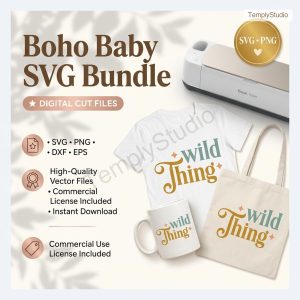

Choosing between SVG, PNG and DXF can feel confusing when a cut-file listing includes several downloads. The right format depends on whether you want clean machine-cut paths, a transparent image for print-then-cut, or compatibility with an older or specific design workflow. This guide explains the practical differences without promising that one file will work identically in every app or machine.
SVG, PNG and DXF at a glance
| Format | What it stores | Best starting point for | Check before downloading |
|---|---|---|---|
| SVG | Scalable vector paths and shapes | Cutting, resizing and editing in compatible software | Your software can import SVG and preserve the paths |
| PNG | Raster pixels with optional transparency | Print-then-cut, sublimation, mockups and image-based projects | Transparent background, resolution and intended print size |
| DXF | CAD-style vector geometry | Workflows or older software that specifically accepts DXF | Your software version supports the DXF type and units |
When SVG is the best choice
Use SVG when your goal is to create editable cut paths, resize a design without pixelation, or separate shapes in supported software. SVG is usually the clearest starting point for Cricut Design Space and many Silhouette workflows, but imports can vary by software version. If a design contains text, check whether it is outlined or whether the listing includes a font requirement.
When PNG is the better fit
PNG is useful when you need a finished image with a transparent background rather than editable cut paths. It can suit print-then-cut, stickers, sublimation, social graphics and mockups. A PNG does not automatically become a clean vector cut file, so inspect the resolution and transparent background before placing it in a project.
When DXF makes sense
DXF can be helpful when your cutting or design software specifically requests it. It is a vector format, but import behavior, scale and layer handling are not identical across programs. Treat DXF as a compatibility option, not a universal replacement for SVG.
How to choose for Cricut or Silhouette
- Decide whether you need editable cut paths or a finished image.
- Check the product listing for the exact included formats and software compatibility.
- Import a copy, confirm scale and inspect the cut lines before committing materials.
- Keep the original download unchanged so you can retry with another included format.
For a shorter SVG-versus-PNG explanation, see SVG vs PNG for Cricut. You can also browse the Silhouette and SVG collection for listings with clearly stated file details.
Frequently asked questions
Is SVG always better than PNG?
No. SVG is often more flexible for editable cut paths, while PNG can be the right choice for print-then-cut or image-based work.
Will every Cricut project accept DXF?
Not necessarily. Confirm the current software workflow and the product listing before relying on DXF.
Can I sell finished items made from a Temply Studio file?
Check the license shown with the product. Personal-use terms do not automatically grant commercial redistribution rights.
Conclusion
Choose SVG for scalable editable paths, PNG for transparent raster artwork, and DXF when a compatible workflow specifically calls for it. The safest choice is the format that matches your software, project type and the verified details on the listing.
Temply Studio
Stop chasing your goals with sticky notes and scattered notebooks. Our premium digital planners and Canva templates are designed to help you plan with intention, stay consistent, and actually enjoy the process.



Questions about this guide?
Ask about the planner, share how you use it, or tell us what to cover next. Your email stays private.