




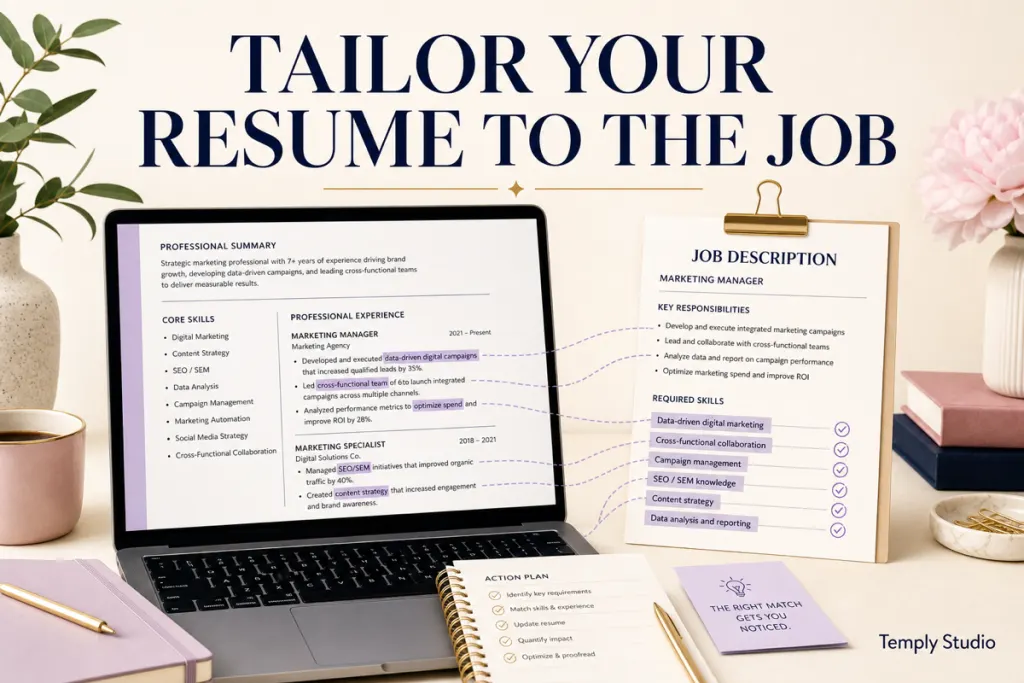
Choose the section order that matches your strongest evidence
Put the strongest match for the job first. If you have no work history in the field, lead with a class project, internship, or volunteer role that shows a skill the posting asks for.
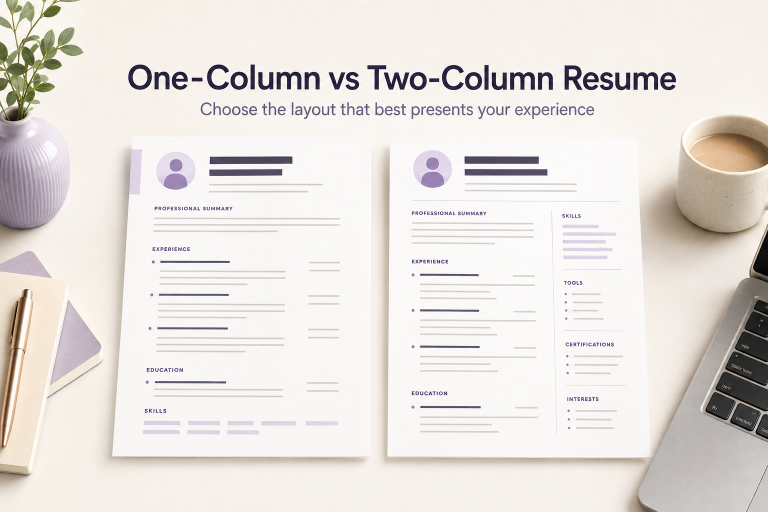
Education and projects first
Use this when coursework, research, a capstone, or a portfolio project best matches the role.
- Education and relevant coursework
- Selected projects
- Internship, campus, volunteer, or part-time experience
- Skills and credentials
Internship first
Use this when an internship or part-time job provides the clearest direct evidence.
- Relevant internship or work experience
- Education
- Projects
- Skills and credentials
Fictional project example: “Designed a three-screen appointment-booking prototype for a class project; documented the user flow and revised the form after peer feedback.” Use a project you worked on. Say which part you did yourself. Leave out tools or skills you could not explain in an interview.
Use evidence, not labels, when experience is limited
A recent graduate does not need to inflate a course project into employment. Label it accurately as a project, internship, practicum, campus role, or volunteer activity, then show what you personally did. A fictional example: “Built a three-table inventory tracker for a student resale project and documented weekly handoff notes for two teammates.” That is clearer than a broad claim such as “experienced in operations.”
Coursework belongs near the top only when it is relevant and recent. As paid or freelance evidence grows, move it ahead of education. Keep dates accurate; do not extend a short internship or omit a graduation date to appear more senior.
Before submitting, check spacing, section order, file naming, and links with the resume formatting guide. If a posting requests a particular format, that instruction overrides the template.
Quick graduate checklist
- Education includes the correct institution, credential, and completion date.
- Projects and internships are labelled truthfully and separated from paid work.
- Every skill listed can be discussed in an interview.
- Portfolio or LinkedIn links open in a fresh browser session.
Worked example: turn a course project into evidence
Imagine a recent graduate applying for a junior operations job. The posting asks for spreadsheet work and clear documentation. The graduate has no office job yet, but in a class project they cleaned 180 survey responses and documented the rules their team used to flag incomplete entries. Put that project under Projects, and identify the course or program so the reader knows where the work came from.
A possible bullet is “Reviewed 180 survey responses in Excel, flagged incomplete records, and wrote a one-page checklist so teammates could repeat the review.” Use your own scope and tools. If you cannot verify a number, describe the deliverable instead, such as a cleaned spreadsheet and a checklist.
If your most relevant example is an internship, lead with Experience and place Education below it. If a qualification is required and you just earned it, make it easy to find near the top. Check the resume section order guide for layouts you can adapt.
Pick one example for a job posting
Suppose a help desk posting asks you to write clear instructions. A class project that shows those instructions could belong before an unrelated summer job. In your project bullet, name the guide you wrote, who used it, and the part you handled. If the job instead asks for customer service, a part-time role that shows how you helped customers may belong first.
Temply Studio
Stop chasing your goals with sticky notes and scattered notebooks. Our premium digital planners and Canva templates are designed to help you plan with intention, stay consistent, and actually enjoy the process.

Questions about this guide?
Ask about the planner, share how you use it, or tell us what to cover next. Your email stays private.