




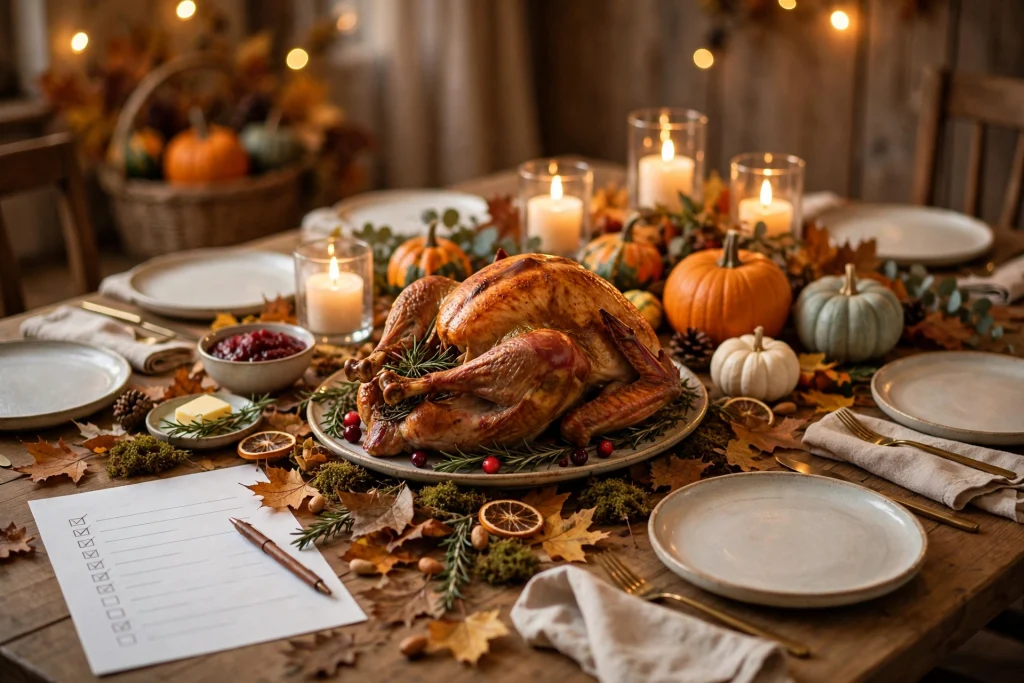
Thanksgiving dinner looks effortless when someone else hosts it. When you are the host, it takes planning — and that is exactly what this thanksgiving planning checklist is for. Instead of a frantic week of forgotten ingredients and oven Tetris, you get a calm, week-by-week timeline that walks you from four weeks out all the way to a relaxed day-of cooking schedule. Whether you are hosting two people or twenty, working through this checklist means you actually get to enjoy the holiday you worked so hard to create.
The secret of experienced hosts is not talent; it is writing things down early. A checklist turns the vague anxiety of “I need to get ready for Thanksgiving” into specific, doable tasks with deadlines. Print this guide or keep it in your planner, check things off as you go, and watch the holiday stop feeling overwhelming.
4 Weeks Out on Your Thanksgiving Planning Checklist: Guests, Menu Vision, and Big-Picture Planning
Four weeks before Thanksgiving is the foundation-setting phase. Nothing here is urgent, but everything here makes the later weeks easier.
- Finalize your guest list. Count heads, including kids. Your headcount drives every other decision: how much food to buy, how many seats you need, and whether your oven can handle the plan.
- Send invitations. A simple text, call, or email works. Ask guests to RSVP with any dietary restrictions and allergies — this is much easier to accommodate now than the week of.
- Decide on potluck vs. full hosting. There is no shame in asking guests to bring a dish. Assign specific categories (one person brings dessert, another brings a side) so you do not end up with four green bean casseroles.
- Sketch your menu. You do not need recipes yet — just the shape of the meal: turkey or alternative main, three to five sides, bread, dessert, drinks. Note which dishes guests are bringing.
- Check your equipment. Do you own a roasting pan that fits your turkey? A meat thermometer? Enough serving dishes? Order or borrow anything missing now, not the Tuesday before.
- Plan travel and lodging if needed. If guests are coming from out of town, confirm sleeping arrangements. If you are traveling, book now while options remain. A Trip Budget & Expense Tracker is handy here for keeping travel and hosting costs visible in one place.
This is also the right moment to set a budget. Holiday spending creeps up silently — groceries, decor, travel, host gifts. Decide on a total now and track it as you go; your January self will thank you.
3 Weeks Out: Recipes, Seating, and the Master Grocery List
With the guest list settled, three weeks out is when the thanksgiving planning checklist gets specific.
- Choose your exact recipes. Pick one recipe per dish and stick with it. Now is the time to try a new recipe if you must — never debut an untested dish on Thanksgiving day itself.
- Build your master grocery list. Go recipe by recipe and write down every ingredient, then consolidate duplicates. Organize the list by store section (produce, dairy, baking, meat, frozen) so one trip covers everything.
- Split the list into “buy now” and “buy fresh.” Pantry staples, canned goods, frozen items, wine, and non-perishables can be bought this week. Fresh produce, dairy, and bread wait until the week of.
- Plan your seating. Count chairs, not just people. Borrow or rent extras if needed, and think about where kids, elderly guests, and anyone with mobility needs will sit most comfortably.
- Order the turkey. If you are buying fresh, reserve it now. If frozen, buy it this week so it has time to thaw safely (allow about 24 hours of thawing per 4–5 pounds in the refrigerator).
- Check dietary needs against the menu. Make sure every guest — vegetarian, gluten-free, allergic — has at least a main-worthy plate. Label dishes on the day so nobody has to guess.
A recipe planner earns its keep this week. The Seasonal Recipe Planner gives you dedicated space to collect your chosen recipes, plan the full menu, and build a consolidated shopping list — exactly the paperwork this phase generates. Keeping it all in one organizer beats a pile of sticky notes and screenshots.
2 Weeks Out: Prep, Decor, and the Cooking Schedule
Two weeks out, the plan starts turning into action. This is the week of advance prep — the quiet work that makes Thanksgiving day feel calm.
- Do the “buy now” grocery run. Clear out pantry space first, then buy all non-perishables, frozen goods, beverages, and paper products.
- Make and freeze what you can. Pie dough, dinner rolls, cranberry sauce, stock, and many casseroles freeze beautifully. Label everything with the dish name and date.
- Write your day-of cooking timeline. Work backward from serving time: the turkey needs hours plus resting time; sides need oven slots; some dishes can be made ahead and reheated. Write every dish with its start time, oven temperature, and duration. This single page is the most valuable document of your whole thanksgiving planning checklist.
- Plan the table. Decide on your table setup: tablecloth, centerpiece, place cards, candles. Keep it simple — a few pumpkins, some candles, and cloth napkins look festive without a craft project.
- Confirm guest contributions. A quick message to everyone bringing a dish: what they are bringing, what time they will arrive, and whether they need oven space when they get there.
- Prep the guest spaces. Clean the guest room or sleeping areas, put out fresh towels, and clear a closet or rack for coats. Small touches make guests feel genuinely welcome.
1 Week Out: Fresh Groceries and Final Confirmations
The final week is about fresh food and locking in details. Keep the pace steady — most of the heavy lifting is already done.
- Buy fresh ingredients. Produce, dairy, fresh herbs, bread, and anything perishable. Shop early in the week to avoid the pre-holiday crowds.
- Start thawing the turkey. Move a frozen turkey to the refrigerator now, following the 24-hours-per-4–5-pounds rule. A turkey that is still icy on Wednesday night is a genuine emergency; one that started thawing a week out is a non-issue.
- Confirm the final headcount. One last check-in with guests. Adjust food quantities and seating if the number changed.
- Chill beverages and set up the drink station. Clear fridge space for wine, sparkling drinks, and anything guests are bringing. Set up a self-serve drink area so you are not playing bartender all evening.
- Do a deep clean of kitchen and dining areas. Not the whole house — focus where guests will be. A clean kitchen also makes the cooking days dramatically more pleasant.
- Charge your camera and clear phone storage. You will want photos, and nothing is sadder than a “storage full” message during dessert.
Use a daily planner to map this week hour by hour. The Minimalist Daily Planner works well for laying out each day’s errands, prep tasks, and cooking steps on clean, distraction-free pages — especially handy when the week gets busy and your brain gets full.
2–3 Days Before: Cook Ahead and Set the Stage
This is the most productive window of the whole holiday. Almost everything except the turkey and a few fresh sides can be made now.
- Bake pies and desserts. Most pies taste better after a day of resting anyway. Apple, pumpkin, and pecan all hold beautifully.
- Prep vegetables. Chop, peel, and portion everything: onions, celery, carrots, green beans, Brussels sprouts. Store in labeled containers so day-of cooking is pure assembly.
- Make cranberry sauce and any cold sides. These improve with a day or two in the fridge.
- Set the table. Lay out the tablecloth, dishes, glasses, flatware, napkins, and centerpiece now — not while the turkey rests and guests hover. It is one less thing competing for your attention on the day.
- Brine the turkey if you brine. A wet brine needs 12–24 hours; a dry brine needs 24–48. Start on schedule and keep the bird refrigerated throughout.
- Do a final equipment check. Thermometer? Carving board and knife? Trivets for hot dishes? Gravy boat? Lay out serving dishes with sticky notes naming which dish goes in each — future you will be grateful.
Thanksgiving Day: A Calm Cooking Timeline
The day itself should feel like following a recipe, not improvising one. Here is a sample timeline for a 4:00 PM dinner — shift everything earlier or later to match your serving time.
- Morning (8:00–10:00): Take the turkey out of the fridge to lose its chill. Prep any remaining fresh items. Set out butter, cheese, and appetizers. Put on something comfortable — you will be on your feet.
- Late morning (10:00–12:00): Turkey goes in the oven (timing depends on size — roughly 13 minutes per pound at 350°F for an unstuffed bird, but trust your thermometer, not the clock). While it roasts, assemble casseroles and sides that bake later.
- Early afternoon (12:00–2:00): Bake make-ahead sides to reheat, prepare the salad (dress it at the last minute), set out appetizers for arriving guests. Accept help when offered — give helpers specific jobs like setting drinks out or slicing bread.
- Mid-afternoon (2:00–3:30): Turkey comes out to rest (at least 30 minutes — this is non-negotiable for juicy meat). Use the freed oven for rolls and final sides. Make the gravy from the drippings while the turkey rests.
- Serving time (4:00): Carve, plate, and serve. Everything is hot, the table is set, and you actually get to sit down.
- After dinner: Clear the table together, pack leftovers into containers (send guests home with some — that is tradition), and put the coffee on for pie. Dishes can wait; the evening cannot.
The golden rule of the day: follow the timeline you wrote two weeks ago. When the kitchen gets chaotic, the written plan is your calm. Tape it to a cabinet door where you can see it.
Guest List and Seating: The Details That Matter
Food gets the glory, but guest logistics determine whether the evening feels smooth. A few details worth your attention:
- Keep a single guest list. Names, headcount, dietary needs, what each person is bringing, arrival time. One list, updated as things change — not scattered across five text threads.
- Seat with intention. Put the great conversationalists near shy guests, keep kids where they can be kids, and give elderly guests the most comfortable chairs away from the kitchen traffic.
- Plan for coats, bags, and shoes. A designated spot near the door prevents a pile on your bed. A simple coat rack or cleared closet works.
- Have a kids’ plan. A coloring table, a movie queued up, or an outdoor game keeps little ones happy while adults linger over coffee.
- Brief your co-host. If a partner, family member, or friend is helping, divide responsibilities clearly: one person owns the kitchen timeline, the other owns guests, drinks, and the table.
Grocery-List Strategy: Shop Once, Shop Smart
The difference between one calm grocery trip and three frantic ones is the list. Here is how to build a list that works.
- Extract ingredients recipe by recipe. Go through each chosen recipe and write down every ingredient with its quantity. Do not trust your memory or your pantry — write it all.
- Check what you already own. Cross off pantry staples, spices, and basics you genuinely have (check the dates on baking powder and spices while you are at it).
- Consolidate and group by store section. Merge duplicates (“butter” appearing in four recipes becomes one line with the total), then reorder the list to match your store’s layout: produce, meat, dairy, baking, canned goods, frozen, beverages.
- Split into two trips. Trip one (two weeks out): everything non-perishable. Trip two (the week of): fresh produce, dairy, bread, and anything perishable. Two planned trips beat four panicked ones.
- Add the non-food items. Paper towels, napkins, candles, ice, storage containers for leftovers — the forgotten items that cause the emergency store run.
Keep the running list in your Seasonal Recipe Planner alongside your recipes, so the menu and the shopping list never get separated. When you find yourself in the store wondering “did I need cream?”, the answer is right there next to the recipe that needs it.
Tracking the Budget: Thanksgiving Without the January Regret
Holiday hosting has a way of quietly costing twice what you expected. Groceries, decor, wine, travel, host gifts, the extra electricity from an oven running all day — it adds up. The fix is simple: decide on a number before you spend, and write down spending as it happens.
Start with a realistic total based on your guest count and menu. Then log every Thanksgiving-related purchase in one place — a notes page, a spreadsheet, or the expense pages of your planner. The Trip Budget & Expense Tracker works just as well for hosting costs as for travel: categories, running totals, and a clear picture of where the money went. Review the total the week after the holiday while it is fresh; that number becomes next year’s budget baseline, and each year it gets more accurate.
A few easy savings that do not cheapen the holiday: buy store-brand pantry staples, choose one signature cocktail instead of a full bar, use natural decor (pumpkins, pinecones, candles) instead of expensive florals, and let guests contribute dishes — most people genuinely want to help.
Frequently Asked Questions
When should I start planning Thanksgiving dinner?
Start your thanksgiving planning checklist about four weeks out. That gives you time to finalize the guest list, choose recipes, order the turkey, and spread the work across calm weekly phases instead of cramming it into three frantic days.
How far in advance should I buy a turkey?
Reserve or buy your turkey two to three weeks ahead. A frozen turkey needs about 24 hours of refrigerator thawing per 4–5 pounds, so a large bird needs the better part of a week. Buying early removes the single biggest timing risk of the holiday.
What can I make ahead of time for Thanksgiving?
More than you think: pie dough and most pies, cranberry sauce, dinner rolls, stock and gravy base, casseroles, and all vegetable prep can be done days ahead. On the day itself, you should only be roasting the turkey, reheating sides, baking rolls, and making gravy from the drippings.
How do I plan a Thanksgiving menu for guests with dietary restrictions?
Ask about restrictions when you invite guests — four weeks out, not four days. Make sure every guest has a full plate: naturally accommodating dishes (roast vegetables, salad, mashed potatoes made with olive oil) plus one or two intentional substitutes. Label everything on the day so guests can serve themselves confidently.
How do I keep Thanksgiving day itself calm?
Write a cooking timeline two weeks ahead, working backward from serving time, and follow it on the day. Prep everything possible in advance, set the table the night before, accept help with specific tasks, and remember: a relaxed host sets the tone for the whole evening. The timeline taped to your cabinet door is worth more than any recipe.
Thanksgiving rewards the planner. Work through this thanksgiving planning checklist week by week, keep your recipes and grocery lists in one organized place, and you will spend the holiday enjoying your guests instead of rescuing your schedule. Get the Seasonal Recipe Planner here and start your calmest Thanksgiving yet.
Temply Studio
Stop chasing your goals with sticky notes and scattered notebooks. Our premium digital planners and Canva templates are designed to help you plan with intention, stay consistent, and actually enjoy the process.



Questions about this guide?
Ask about the planner, share how you use it, or tell us what to cover next. Your email stays private.