




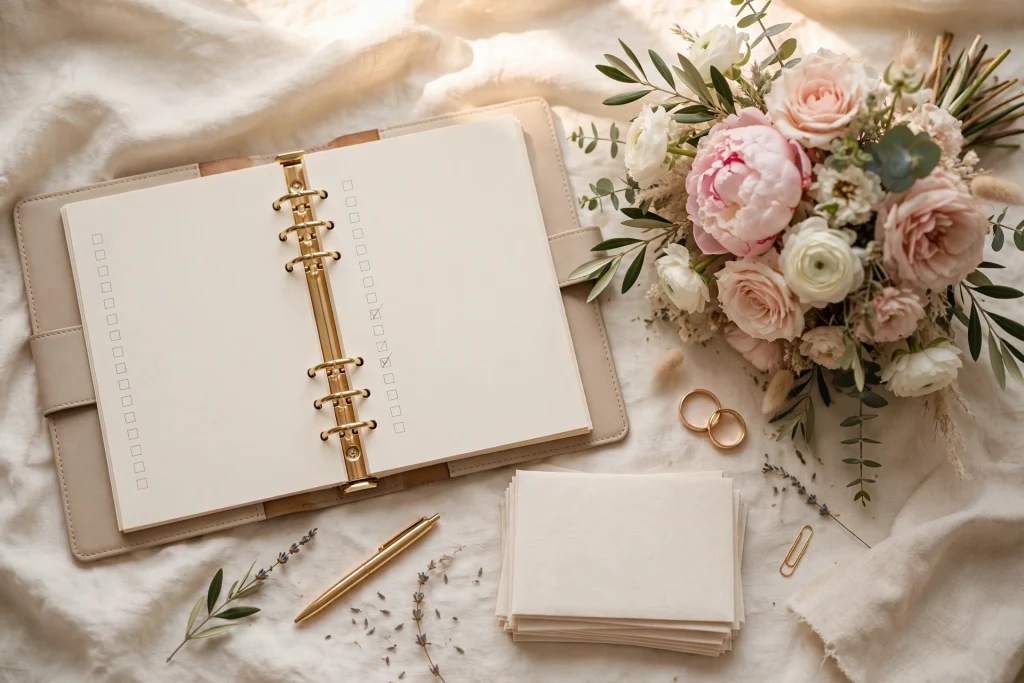
A wedding is one of the happiest days of your life — and one of the most complicated projects you’ll ever run. Without a wedding planning timeline checklist, even organized couples end up scrambling: venues booked too late, vendors hired out of panic, and details slipping through the cracks in the final week. This guide gives you a realistic, month-by-month plan that takes you from “we’re engaged!” to “I do” without the stress spiral.
Every couple’s situation is different, but the logic of the timeline stays the same: secure the things that sell out first (venues, photographers, dresses), then layer in the details that depend on those big decisions. Whether you have 18 months or six, start at the top of the timeline and work forward — the same order applies either way.
Your Wedding Planning Timeline Checklist: Month by Month
12+ Months Out: The Foundation
Your first month of engagement should be about celebrating — genuinely. After the initial excitement settles, these are the decisions that shape everything else:
- Set your budget. Have the money conversation early, including what family members may contribute. A practical breakdown: venue and catering typically take 40–45%, photography and videography 10–15%, attire 5–8%, flowers and décor 8–10%, and entertainment 5–10%. Keeping a running budget tracker from day one prevents the slow creep that derails most wedding budgets. A dedicated wedding budget planner spreadsheet with separate tabs for estimates, deposits, and final payments makes this far easier than a single spreadsheet column.
- Draft the guest list. You don’t need names yet — just a headcount range. Your number determines your venue size, catering cost, and stationery order, so ballparking it now saves expensive re-planning later.
- Pick a date range. Give yourself 2–3 acceptable weekends rather than one rigid date. Flexibility is your best negotiating tool with venues.
- Book your venue. This is the single most time-sensitive task. Popular venues book 12–18 months out, especially for Saturday weddings in spring and fall. Tour at least three, ask what’s included (tables, chairs, linens, parking, cleanup), and get the total cost — not just the rental fee.
- Hire a planner (if you want one). Full-service planners, month-of coordinators, and day-of coordinators are very different services at very different prices. If a full planner isn’t in budget, a month-of coordinator (typically $1,200–$2,500) is the best value in wedding spending.
9–11 Months Out: The Core Team
With the venue locked, you can now book everyone who works from your date and location:
- Photographer and videographer. The best shooters book a year out. Review full galleries, not just highlight reels, and confirm you get the rights to print and share. Budget 10–15% of your total here — these are the vendors whose work you keep forever.
- Caterer and cake. If your venue doesn’t include catering, book tastings now. Order the cake 6–9 months out; tasting appointments at popular bakeries fill quickly.
- Band or DJ. Live bands book faster than DJs and often cost 2–3x more ($4,000–$8,000 vs. $1,000–$2,000). Ask for a must-play and do-not-play list.
- Florist. Bring your venue photos and color palette to the consultation. Seasonal flowers cost 30–50% less than out-of-season imports.
- Officiant. If you need a religious or civil officiant, book now — many limit how many weddings they’ll do per weekend.
- Order your dress or suit. Custom and made-to-order gowns take 6–9 months to arrive, plus 2–3 months of alterations. This is the most commonly underestimated lead time in wedding planning.
6–8 Months Out: Details That Depend on the Big Decisions
- Finalize the guest list and collect addresses. Aim for your final list 6 months out. Start collecting mailing addresses — you’ll need them for save-the-dates, invitations, and thank-you notes.
- Send save-the-dates. These go out 6–8 months before the wedding (8–10 for destination weddings). Include your wedding website URL so guests can find travel info.
- Book the honeymoon. If you’re traveling during peak season or want a specific resort, book now. Budget 7–10 days for the trip itself, and avoid flying out the morning after the wedding.
- Buy wedding bands. Engrave them if you like — engraving adds 2–4 weeks.
- Book hair and makeup artists. Schedule a trial 3–4 months out. Bring reference photos and your actual accessories.
- Order invitations. Invitations take 4–6 weeks to print plus addressing time. Order 15–20 extras for keepsakes and mistakes.
- Register for gifts. Register 6 months out so early shoppers (shower guests, your parents) have options. Include a spread of price points — most guests spend $50–$150.
4–5 Months Out: Logistics and Fittings
- Finalize the menu. Confirm the catering timeline: cocktail hour length, whether courses are plated or stations, and the cake-cutting plan.
- First dress fitting. Bring the exact shoes and undergarments you’ll wear on the day. Most brides need 2–3 fittings.
- Order bridesmaid dresses and groomsmen attire. Made-to-order bridesmaid dresses take 3–4 months, so don’t let this slide.
- Book transportation. Shuttles for out-of-town guests, a getaway car, and parking logistics. Book 4–5 months out for Saturday weddings.
- Plan the ceremony details. Readings, unity rituals, processional order, music cues. Write these down and share them with your officiant and coordinator.
- Start the wedding-day timeline. Work backward from your ceremony time. Hair and makeup take 45–60 minutes per person; first-look photos need 60–90 minutes before the ceremony.
2–3 Months Out: Confirmations and Final Orders
- Send invitations. Mail them 6–8 weeks before the wedding (10–12 for destination). Set your RSVP deadline 3–4 weeks before the date — you need the final count for catering 7–14 days out.
- Final dress fitting. This should be 2–4 weeks before the wedding. Pick up the dress a week before and store it properly.
- Confirm all vendors. Send every vendor a confirmation email with the date, arrival time, setup location, and your coordinator’s contact info. Get everything in writing.
- Apply for the marriage license. Requirements vary by state and country — check the validity window (often 30–90 days) and whether both partners must appear in person.
- Finalize seating chart. Wait until RSVPs are in. Seat-chart tools in most wedding websites make drag-and-drop easy.
- Write your vows. If you’re writing your own, draft them now while you’re calm, not the night before.
- Order favors and welcome bags. Welcome bags for out-of-town guests: water, snacks, a weekend itinerary, and something local.
Final Month: The Home Stretch
- Give vendors the final headcount. Caterers and rental companies typically need it 7–14 days before. This is also when you pay final balances — budget for them now.
- Pick up attire and break in shoes. Wear your wedding shoes around the house for a few evenings. Your feet will thank you.
- Pack for the honeymoon. Don’t leave this for wedding week. Check passports, prescriptions, and any visa requirements.
- Delegate. Assign specific jobs to specific people: who returns the rentals, who holds the marriage license, who tips the vendors. Write it down — verbal assignments evaporate.
- Do a venue walkthrough. Walk the space with your coordinator or planner. Confirm where everything goes: DJ setup, cake table, bar, photo locations.
Wedding Week: Breathe and Execute
- Confirm arrival times with every vendor one final time. One short email each.
- Assemble your emergency kit. This is the detail couples forget until they need it: stain remover, pain relievers, bobby pins, fashion tape, breath mints, a sewing kit, blister pads, deodorant, and phone chargers. A pre-made wedding day emergency kit checklist covers everything in one pack so you’re not improvising on the morning of.
- Attend the rehearsal and rehearsal dinner. Walk the processional at the actual venue if possible.
- Get a full night’s sleep. Seriously. Delegate the late-night setup to someone else.
- Prepare vendor tips and payments. Put cash tips in labeled envelopes the day before: $50–$100 per key vendor, 15–20% for hair and makeup, and gratuity for catering per your contract.
Wedding Day: Be a Guest at Your Own Wedding
Eat breakfast. Drink water. Hand your phone to your maid of honor. Your only job today is to be present — your coordinator, vendors, and delegated helpers handle everything else. The timeline you’ve been building for months exists precisely so you don’t have to think about logistics today.
The Master Wedding Checklist: Every Task at a Glance
Use this recap to audit your progress at any point. If an item is unchecked and its deadline has passed, that’s your next priority.
- ☐ Set budget and draft guest list
- ☐ Book venue, photographer, videographer, caterer, band/DJ, florist, officiant
- ☐ Hire planner or month-of coordinator
- ☐ Order wedding dress and suits
- ☐ Send save-the-dates
- ☐ Book honeymoon and transportation
- ☐ Buy wedding bands
- ☐ Book hair, makeup, and trial appointments
- ☐ Order invitations and stationery
- ☐ Create gift registry
- ☐ Send invitations (6–8 weeks out)
- ☐ Apply for marriage license
- ☐ Finalize menu, seating chart, and ceremony details
- ☐ Write vows
- ☐ Order favors and welcome bags
- ☐ Give final headcount and pay vendor balances
- ☐ Venue walkthrough with coordinator
- ☐ Pack honeymoon bags and emergency kit
- ☐ Prepare vendor tips in labeled envelopes
- ☐ Rehearsal and rehearsal dinner
- ☐ Get married 🎉
Budget Tips That Actually Save Money
Most couples overspend in the same three places: guest count creep, décor, and last-minute vendor premiums. Trim the guest list by 10 and you’ll save $1,500–$3,000 on catering alone. Choose a Friday or Sunday — venues commonly discount 10–20% off Saturday rates. And book in-season flowers and local produce; your florist and caterer will both be happier.
The single highest-ROI habit is tracking every dollar against your plan from the beginning. Couples who keep a live budget tracker finish within 5% of their target far more often than those who “keep it in their head.” If you want a ready-made system, the wedding budget planner spreadsheet with its seven pre-built tabs (estimates, deposits, final payments, and more) takes the setup work off your plate entirely.
Rule of thumb: if a vendor can’t give you an itemized quote in writing, keep looking. Transparent pricing is the clearest signal of a trustworthy vendor.
Frequently Asked Questions
How far in advance should you start planning a wedding?
Twelve to eighteen months is ideal for a traditional wedding — it gives you access to the best venues and vendors without rushing. That said, plenty of beautiful weddings happen in six months. The key is starting with the time-sensitive bookings (venue, photographer, dress) and working the timeline forward rather than trying to do everything at once.
What is the first thing to do when planning a wedding?
Set your budget and estimate your guest count before booking anything. These two numbers determine your venue size, catering costs, and nearly every other decision. Couples who skip this step almost always have to redo early bookings once reality hits.
How much does the average wedding cost in 2026?
The average U.S. wedding now runs $30,000–$35,000, with major cities skewing higher. The biggest levers are guest count, venue choice, and day of the week. A detailed, realistic budget tracker — not a vague total in your head — is what keeps you on target.
What should be in a wedding day emergency kit?
The essentials: stain remover pen, pain relievers, bandages and blister pads, bobby pins, safety pins, fashion tape, a mini sewing kit, deodorant, breath mints, tissues, phone charger, snacks, and water. Assign one person to carry it so it’s always within reach.
When should you send wedding invitations?
Mail invitations 6–8 weeks before the wedding (10–12 weeks for destination weddings), with an RSVP deadline 3–4 weeks before the date. Save-the-dates go out earlier: 6–8 months ahead, or 8–10 for destination events.
Start Planning With Confidence
A wedding planning timeline checklist only works if you can see your progress at a glance — and a beautiful planner you actually enjoy opening makes that happen. Grab the wedding budget planner spreadsheet to keep every deposit, balance, and estimate in one place from engagement day to the final vendor payment. Pair it with a wedding day emergency kit checklist so the one day you can’t plan for surprises is the day you’re most prepared. Happy planning — and congratulations!
Temply Studio
Stop chasing your goals with sticky notes and scattered notebooks. Our premium digital planners and Canva templates are designed to help you plan with intention, stay consistent, and actually enjoy the process.

Questions about this guide?
Ask about the planner, share how you use it, or tell us what to cover next. Your email stays private.