




Show remote-work practices you have actually used
Show how you kept work moving when people were on different schedules. Use a real example from a job, class, project, or volunteer role. You can show how you wrote a clear update even if you have never worked remotely.
Fictional example: “After each project handoff, recorded the completed work, next owner, deadline, and unresolved blocker in the shared tracker.”
Name the tools you used and the part you handled. Check the posting for country, time zone, and work authorization rules. If the employer asks about your location or schedule, give your actual details.
Translate remote evidence into resume lines
Do not write “remote work experience” as a bare trait. Show the practice and the result you can substantiate. For example, a fictional operations assistant might write: “Documented recurring handoff notes in a shared tracker so three teammates across time zones could continue client work without duplicate requests.” That line names the practice, the collaboration surface, and the operational benefit without claiming a metric the candidate cannot prove.
Useful evidence can come from office, hybrid, school, volunteer, or client work. The remote employer is usually testing whether you can write clearly, manage priorities, use the agreed tools, and escalate blockers early. If the posting names a tool or working pattern, mirror it only when you have real experience with it.
Before submitting, run the document through the resume formatting checklist and compare the final file type with the employer’s instructions.
Remote-application mistakes to avoid
- Listing “self-motivated” or “excellent communicator” without a work example.
- Claiming proficiency in tools you have only watched in tutorials.
- Using a visually complex template that makes the written evidence harder to scan.
- Omitting location, time-zone, or work-authorization details when the posting asks for them.
Worked example: show how a handoff worked
Imagine a support assistant who handed customer cases to a teammate in another time zone. “Worked with a remote team” gives the recruiter little to picture. A more concrete example is “Wrote end-of-shift notes for open tickets, including the customer’s last reply and the next action, so the incoming support team could pick up the queue.” Use only details you can discuss in an interview.
If your work was hybrid, say so when the distinction matters. You can explain how you used shared documents or recorded decisions during the remote portion without claiming that the job was fully remote. If this is your first remote role, give a real example from a distributed class, volunteer group, or project, and label it as such.
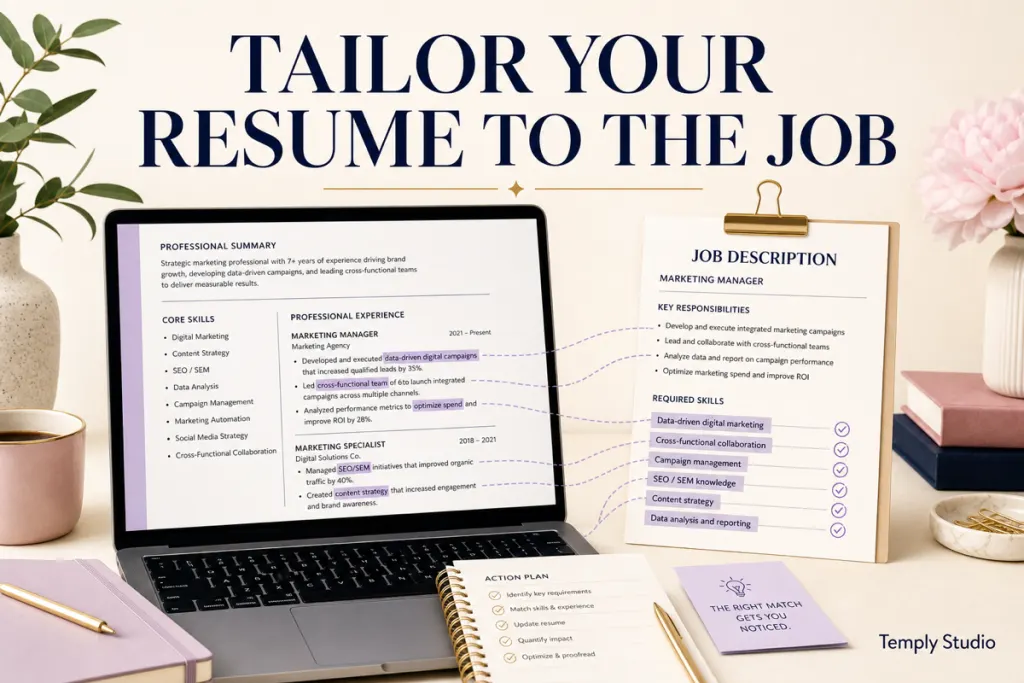
Review a job listing for working hours, location eligibility, and time-zone overlap. Address those details where the application asks for them. Use the resume tailoring guide to decide which work examples to lead with.
Check what your example actually shows
Imagine the posting asks you to share progress with a team in another time zone. Start from one task you have done. Name how you recorded the update, what the next person could find in it, and which part you handled. If you drafted notes for a student group, say so. A useful school example is easier to explain than a claim about remote work you have never done.
Temply Studio
Stop chasing your goals with sticky notes and scattered notebooks. Our premium digital planners and Canva templates are designed to help you plan with intention, stay consistent, and actually enjoy the process.


Questions about this guide?
Ask about the planner, share how you use it, or tell us what to cover next. Your email stays private.