
Quick answer: use one page when you can present the most relevant experience, skills, and achievements clearly without squeezing the layout. Use two pages when relevant evidence genuinely needs more space. CareerOneStop’s resume guidance describes one to two pages as a normal range and recommends using two pages only when necessary for the amount of experience.
The goal is not to “win” by making the resume shorter. It is to give the employer enough relevant evidence to understand your fit without forcing them through repetitive or low-value information.
One-page vs two-page resume at a glance
| Question | One page | Two pages |
|---|---|---|
| Best fit | Relevant history can be explained concisely | Relevant history needs more evidence or range |
| Main benefit | Fast, focused overview | More room for achievements, roles and relevant context |
| Main risk | Removing useful evidence just to hit one page | Repeating information or including older details with little value |
| Layout pressure | Can tempt tiny fonts, narrow margins or dense bullets | Can preserve readable spacing if the content justifies page two |
| Decision rule | Use when the full relevant story fits clearly | Use when page two adds meaningful evidence |
Choose one page when relevance is concentrated
A one-page resume can work well for early-career applicants, career changers with a focused target, candidates whose most relevant history is recent, or anyone whose strongest evidence fits comfortably on one page.
Do not force one page by shrinking the font, removing white space, or reducing every bullet to vague fragments. If the page becomes difficult to scan, the length target is working against the reader.
One page is usually enough when
- the role requires a focused set of skills and your strongest evidence is easy to identify;
- older jobs add little to the current application;
- education and certifications can be presented concisely;
- you can keep achievement-focused bullets without crowding the page;
- the resume remains readable with normal margins and a simple type hierarchy.
Choose two pages when page two adds relevant evidence
Two pages can be appropriate for experienced professionals, applicants with several relevant roles, technical careers with meaningful projects or certifications, or positions where leadership scope and achievements need more context.
Page two should earn its place. It should not exist because the resume repeats job duties, includes every position ever held, or contains a long generic skills list. If the second page contains mostly low-priority information, tighten the content instead.
Page two may be useful when you need room for
- multiple recent roles that are directly relevant to the target position;
- measurable achievements that would be lost in over-compression;
- technical or professional projects that demonstrate required skills;
- leadership scope, promotions, or increasing responsibility;
- certifications, publications, or specialized training that the job genuinely values.
Start with relevance before deciding length
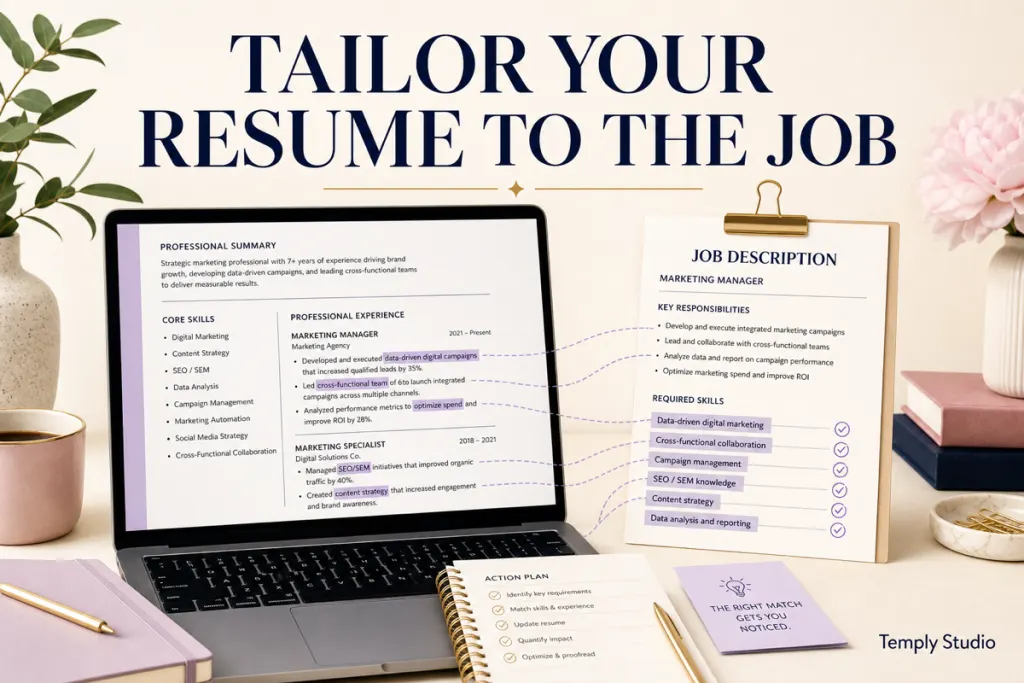
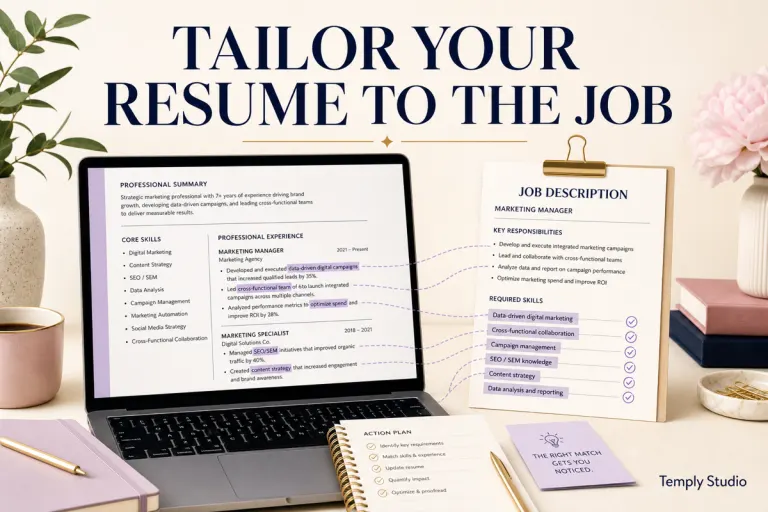
Read the job description and identify the recurring requirements. Then review your resume section by section. Keep evidence that helps answer those requirements, shorten details that add little, and remove repetition.
The resume tailoring guide can help you decide what deserves space before you decide how many pages to use.
Do not confuse page length with layout structure
One-page versus two-page is a different decision from one-column versus two-column. Columns change reading order and space distribution; page length changes how much content the resume contains. Make those choices separately.
For the layout trade-offs, review one-column vs two-column resume templates.
A seven-step length audit
- Mark the target requirements. Highlight skills, responsibilities, and outcomes that appear repeatedly in the job posting.
- Rank your evidence. Identify which roles and achievements best demonstrate those requirements.
- Remove duplicated duties. If several jobs contain the same generic task, keep the strongest or most recent evidence.
- Tighten weak bullets. Replace long task descriptions with concise evidence where you have it.
- Review older history. Keep older roles when they remain relevant; otherwise reduce detail.
- Restore readable spacing. Do not use tiny fonts or compressed margins simply to reach one page.
- Check page two. If it contains meaningful evidence, keep it. If it contains filler, revise.
What should appear on page one?
Page one should establish the core case for the application quickly. That usually means contact information, a concise summary when useful, the most relevant recent experience, and enough context to understand your professional direction. The exact section order depends on the role and your background.
Do not move strong evidence to page two merely to keep an arbitrary visual balance. The first page should contain the information most likely to matter early in the review.
What belongs on page two?
Page two should continue the same story. It may contain additional relevant experience, projects, education, certifications, or other evidence. Use consistent headings, margins, and typography so it reads as one document rather than an appendix.
CareerOneStop recommends a simple, consistent resume layout. Keep the second page easy to identify and avoid a nearly empty page created by one orphaned section.
Length and ATS considerations
There is no safe basis for claiming that one page automatically “passes ATS” or that two pages automatically fail. Applicant tracking systems and employer workflows vary. Use clear section headings, straightforward reading order, and the file format requested by the employer.
The ATS resume template guide covers layout decisions without promising universal parsing or hiring outcomes.
Common resume-length mistakes
- Using tiny text to force one page: readability is more important than an arbitrary page count.
- Keeping every old job at equal detail: relevance should determine space.
- Repeating a summary inside job bullets: each section should add new evidence.
- Adding a second page for filler: page two should contain useful information.
- Assuming more pages look more senior: seniority is demonstrated through evidence, not document length.
- Assuming one page is always preferred: CareerOneStop explicitly recognizes one-to-two-page resumes.
Check length again after tailoring
Resume length can change from one application to another. A role that strongly values project leadership may justify more project detail, while another role may need a shorter version focused on technical execution. Do not maintain one fixed page count if the relevance of your evidence changes.
After tailoring, read page one by itself and ask whether it establishes the main case for the role. Then read page two and ask whether it adds evidence rather than repetition. That review usually gives a more useful answer than starting with a strict page target.
Frequently asked questions
Is a two-page resume too long?
Not if both pages contain relevant, readable evidence. Remove filler first, but do not compress useful information into an unreadable one-page layout.
Should a new graduate always use one page?
Often one page is enough, but the decision should still be based on relevant experience, projects, education, and the role. There is no universal rule that applies to every candidate.
Should page two repeat my contact information?
A consistent document identity can be helpful. Follow the layout guidance you choose and make sure the pages clearly belong together.
Can resume length guarantee an interview?
No. Length is only one presentation choice. A resume cannot guarantee interviews or hiring outcomes.
Use the shortest length that preserves strong evidence
Begin with relevance, then edit for clarity. If the strongest case fits comfortably on one page, use one. If a second page adds meaningful evidence and keeps the document readable, two pages can be appropriate.
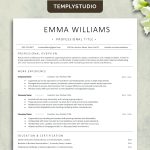
Browse Temply Studio resume templates only after confirming the included formats and editing software on the product page. Template formatting cannot guarantee employer or ATS outcomes.
Authoritative reference
Temply Studio
Stop chasing your goals with sticky notes and scattered notebooks. Our premium digital planners and Canva templates are designed to help you plan with intention, stay consistent, and actually enjoy the process.
Questions about this guide?
Ask about the planner, share how you use it, or tell us what to cover next. Your email stays private.