




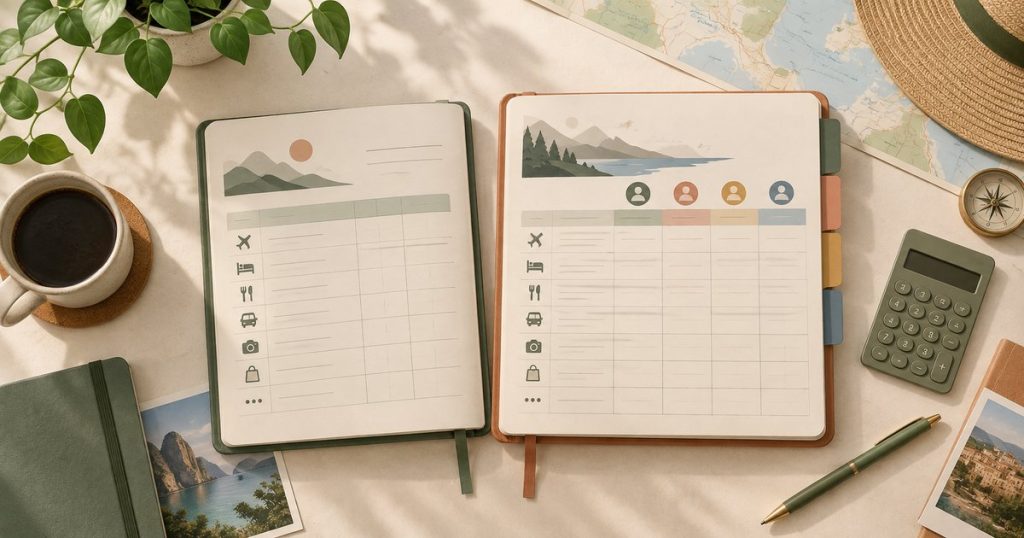
A travel expense tracker should match the way a trip is paid for and reviewed. A single-trip budget often focuses on estimated versus actual spending for one traveler or household. A group tracker needs clearer shared-cost notes, categories and totals so everyone can understand what was recorded.
Travel expense tracker: group trip vs single trip
| Decision factor | Single-trip budget tracker | Group or family expense log |
|---|---|---|
| Main job | Plan and review one trip’s expected and actual costs | Record shared spending across travelers or a household |
| Useful categories | Transport, lodging, food, activities and miscellaneous costs | The same categories plus notes about shared or individual costs |
| Best for | A personal trip budget or one household | Friends, families and groups coordinating expenses |
| Review style | Compare estimates with actual totals | Review who paid, what was shared and what still needs a note |
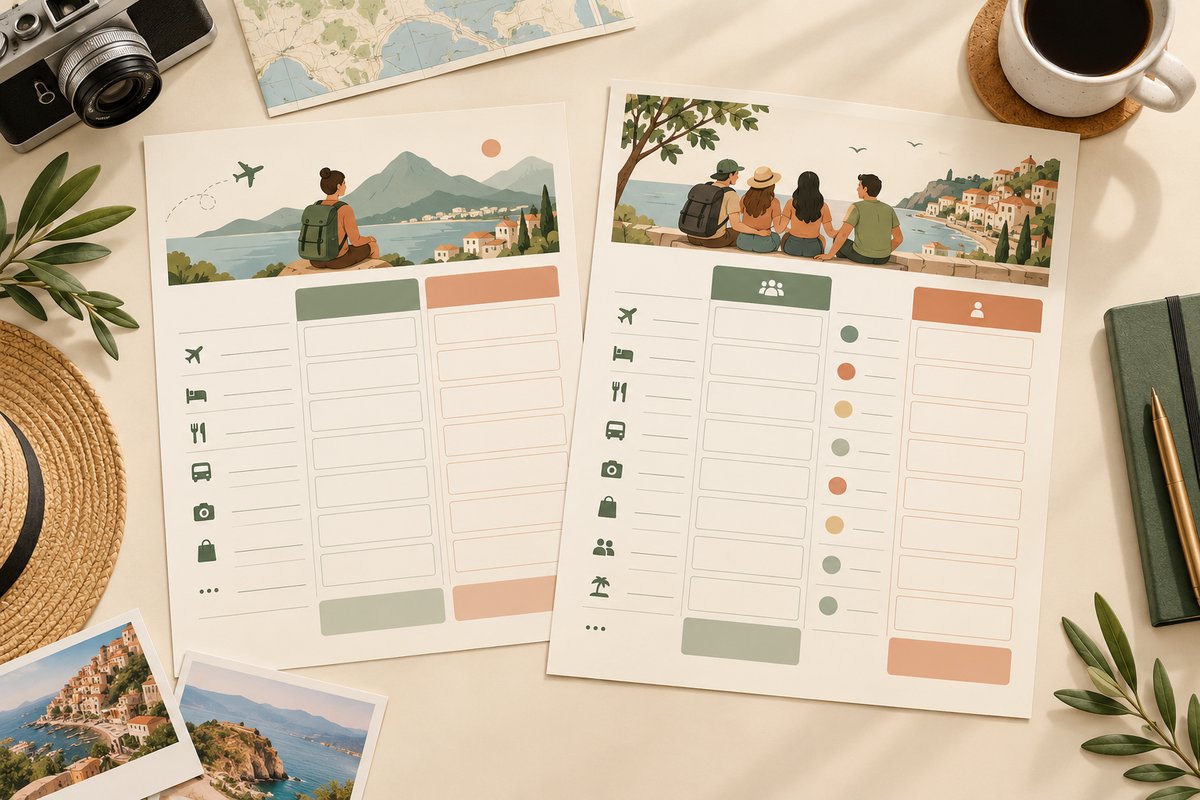
Choose a single-trip budget tracker
A single-trip travel expense tracker is useful when you want to set estimates before departure and record actual spending as the trip progresses. It can help you keep transportation, accommodation, meals, activities and miscellaneous costs in one place without adding group-reimbursement fields you do not need.
Check whether the file includes space for totals, notes, budget-versus-actual comparisons and the page size you want to print. A printer-friendly PDF works well when you want a paper page in a travel folder.
Choose a group or family expense log
A group travel expense tracker is better when several people contribute to the trip or when shared spending needs more context. Use notes to identify the traveler, payment method or shared purpose rather than forcing every cost into a single total.
Keep the log organizational. It is not financial advice and does not calculate a fair split unless the file specifically includes that function. Confirm the product’s included fields before relying on it for reimbursements.
Make your travel expense tracker easier to use
- Choose categories before the trip so entries stay consistent.
- Record costs close to the time they happen.
- Use the notes area for shared-cost context or follow-up.
- Review totals at a regular point instead of waiting until the end.
- Keep the original download and follow the listed personal-use or license terms.
Compare the Printable Trip Budget & Expense Tracker PDF for single-trip planning with the Printable Vacation Expense Log for Families & Groups for shared travel recording. For a broader file-format comparison, see Printable Budget Planner PDF vs Spreadsheet.
5 easy checks before choosing a travel expense tracker
Choose the travel expense tracker around the decisions you will actually make. Before downloading a file, check these five practical points rather than choosing only by the cover design.
- Who needs to see the record? A solo traveler may need one total per category. A group needs enough space to show who paid and which costs were shared. Agree on the people included before recording the first shared expense.
- What will you compare? If you are planning ahead, look for estimated and actual amounts. If the trip has already started, a clear dated expense log may be more useful than a detailed forecast you will not maintain.
- Which currencies will you use? Keep the original amount and currency visible. If you also record a converted amount, note the conversion basis and date so travelers can understand the entry later. Avoid adding unlike currencies into one total.
- How will you capture receipts? A short receipt reference can connect a paper entry to a photo or saved file. Do not write full card numbers, passport details or unnecessary personal information in a shared log.
- When will you review it? Choose a regular moment, such as after dinner or at the end of each travel day. Check unclear entries while everyone still remembers them, then keep a final copy after the trip.
Worked example: shared transport and a personal purchase
Imagine two travelers, Alex and Sam. Alex pays $40 for a taxi they both use; Sam pays $12 for a personal snack. Their travel expense tracker records two purchases totaling $52, but only the taxi belongs in the shared-cost column.
| Expense | Paid by | Amount | Shared or personal? |
|---|---|---|---|
| Taxi | Alex | $40 | Shared by Alex and Sam |
| Snack | Sam | $12 | Sam’s personal purchase |

If they agree to split the taxi equally, Sam’s share is $20. Record any later reimbursement separately from purchases; counting it as another travel expense would inflate the trip total. This is a bookkeeping example, not a rule that every group must split costs equally or a claim that a particular template calculates the split.
Review the record, not just the total
Use the travel expense tracker to compare the plan with what happened. Check missing dates, duplicate receipts and personal costs accidentally included in the shared total. A total without this context can hide a simple recording mistake.
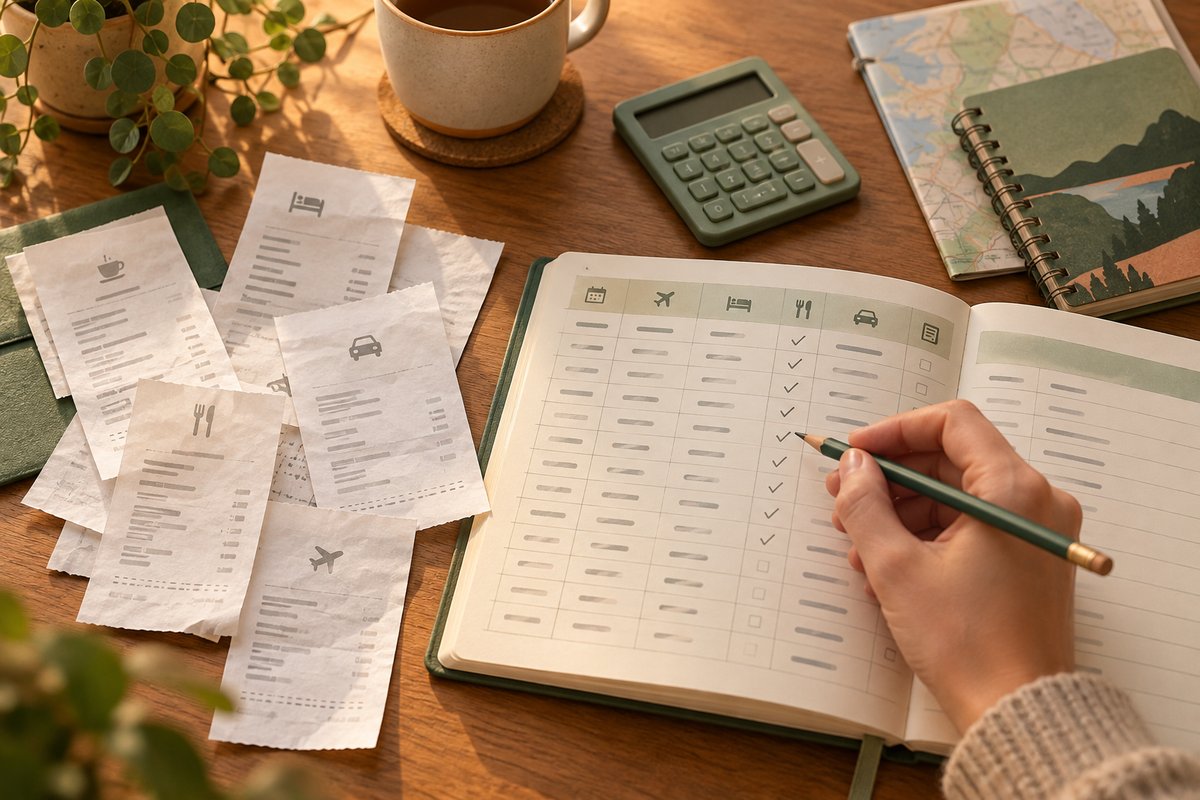
The Consumer Financial Protection Bureau’s spending worksheet illustrates the basic habit of matching receipts to dates and categories before adding totals. Its categories are broader than travel, so adapt your own log to the trip instead of copying every column.
Frequently asked questions
Can I use a single-trip tracker for a group?
You can, but you may need extra notes for shared costs and who paid. A group-oriented log may be easier when several travelers contribute.
Should travel expenses be split equally?
Not necessarily. The file can organize recorded costs, but how a group divides expenses is a decision for the travelers.
Is a printable PDF reusable?
That depends on the file design and license. Check whether the product is intended for personal reuse, printing or editing.
Conclusion
Choose a travel expense tracker that supports the way you record and review costs. Use a single-trip tracker for budget-versus-actual planning around one trip. Use a group or family log when shared spending and notes need to be visible. Match the tracker to the people, categories and review routine you will actually use.
Temply Studio
Stop chasing your goals with sticky notes and scattered notebooks. Our premium digital planners and Canva templates are designed to help you plan with intention, stay consistent, and actually enjoy the process.


Questions about this guide?
Ask about the planner, share how you use it, or tell us what to cover next. Your email stays private.